Ovulation Bleeding: Symptoms, Causes and Treatment

Ovulation bleeding
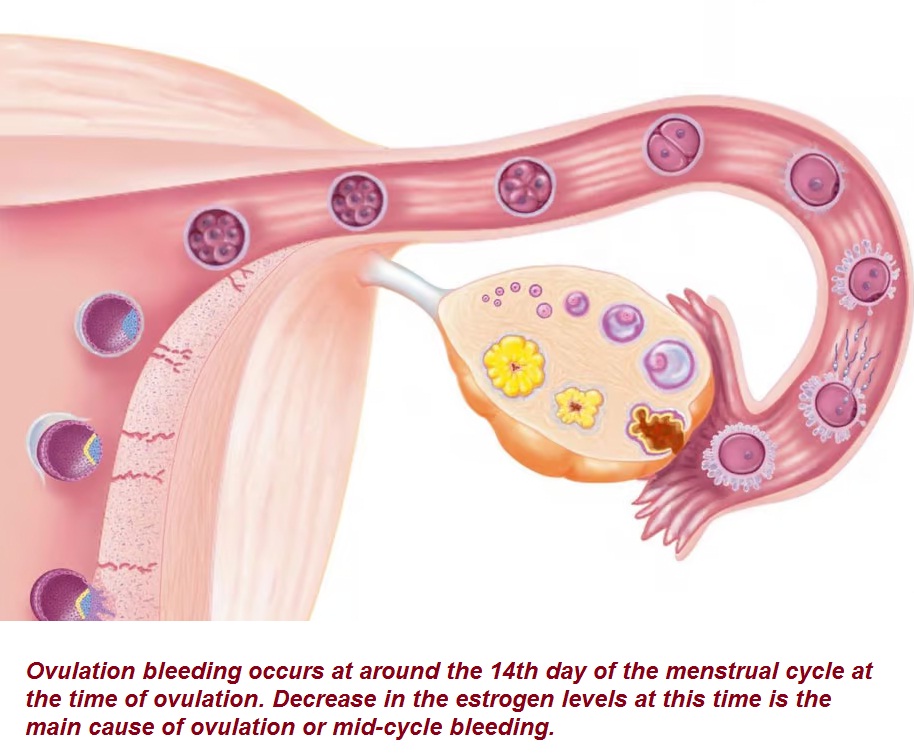
Ovulation bleeding, also known as mid-cycle bleeding occurs at around the 14th day of the menstrual cycle.

Ovulation bleeding is a common yet often misunderstood condition that affects many women. Recently, I had the opportunity to consult with a young woman who was concerned about what she perceived as irregular and short menstrual cycles.

The Patient’s Concern

The patient came to me reporting that she had been experiencing menstrual bleeding every 15 to 16 days for the past few months. She described varying levels of bleeding, with some cycles being as heavy as a normal period and others involving only light spotting.  She was obviously concerned, wondering if this was a sign of pregnancy or perhaps, conditions like PCOS which causes hormonal imbalance.

Identifying Ovulation Bleeding

Upon careful  evaluation of her menstrual dates, it became clear that what she was experiencing was not irregular periods, but rather a combination of regular menstruation and ovulation bleeding. The pattern typically followed this sequence:

  1. Normal menstrual period
  2. Ovulation bleeding 15-16 days later
  3. Another normal period 14-15 days after the ovulation bleeding

What Causes Ovulation Bleeding?

Ovulation bleeding is a normal occurrence for some women. It is usually characterized by:

  • Light spotting
  • Duration of 2-3 days
  • Spontaneous resolution
  •  

This type of bleeding can occur due to two main factors:

  1. The normal menstrual cycle consists of a shift between a  estrogen dominant  phase to a progesterone dominant phase. A few days before ovulation occurs, the body’s estrogen levels rise until it peaks just before ovulation. At ovulation, when the ovaries release a mature egg,  the estrogen levels drop. This is followed by an increase in progesterone levels. These changes in estrogen and progesterone levels can induce light vaginal bleeding.  This is a type of  withdrawal bleeding  called ovulation bleeding or mid-cycle bleeding.
  2. Other factors can contribute to Ovulation  bleeding or mid-cycle bleeding – Hormonal imbalance, such as cervical changes, polyps, fibroids, or even  stress or significant lifestyle changes. 
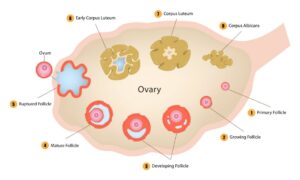
Ovulation
Ovulation

Is Ovulation Bleeding a Cause for Concern?

In most cases, ovulation bleeding is not a cause for worry. It often resolves on its own within a few months. However, it’s important to maintain a healthy lifestyle to help regulate hormonal balance.

Treatment

A.Lifestyle Recommendations

To help manage ovulation bleeding and promote overall hormonal health, I advised the patient to:

  • Improve her diet
  • Reduce stress levels
  • Get adequate sleep
  • Increase fluid intake
  • Enhance her overall lifestyle

These changes can contribute to more regulated and balanced hormones, potentially reducing the occurrence of ovulation bleeding.

B. Medical Treatment

While lifestyle changes are often sufficient, some women may prefer additional intervention.

  • Birth control pills can help stop ovulation bleeding by suppressing the ovaries  and stopping ovulation
  • A short 6-month course of birth control pills is usually adequate
  • After completing the course, ovulation bleeding is likely to stop

In this case, the patient opted for a hormonal birth control pill to help manage the ovulation bleeding. I prescribed a  course of low dose hormonal pills for 6 months, explaining that this treatment would likely stop the ovulation bleeding.

ask questions

Key Takeaways

  • Accurate cycle tracking is crucial for identifying the true nature of menstrual irregularities
  • Ovulation bleeding is a normal occurrence for some women .
  • It can be mistaken for irregular periods
  • It’s usually light and lasts for 2-3 days
  • Lifestyle improvements can help regulate hormones and potentially reduce ovulation bleeding
  • Medical treatment with Birth control pills can be an effective treatment option

Conclusion

Knowing the difference between irregular periods and ovulation bleeding can help decrease unnecessary concerns. For this patient, recognizing that her body was following a normal pattern of menstruation and ovulation provided reassurance and a clearer picture of her reproductive health.

Understanding our menstrual cycles and the various types of bleeding that can occur is crucial for women’s health.

If you experience unusual bleeding patterns or have concerns about your menstrual cycle, it’s vital to consult a gynecologist online for personalized advice and treatment options. Don’t let uncertainty disrupt your daily life. Get the expert guidance you deserve.

Do you have questions about your menstrual cycle or reproductive health? Don’t hesitate to reach out to us for personalized advice and guidance.
Find Out If It’s Time to See a Gynecologist.

Get the Essential Women’s Health Checklist

Share:

Dr.Madhumita Das Mazumdar, MD (O&G) is a Senior Consultant Gynecologist of Guwahati, Assam, India.

She has more than 30 years experience as a private practitioner in Obstetrics and Gynecology.

Consult her online – shw will be happy to help you with your questions.

Click here to ask your question


Periods & Pain
Dr Madhumita Das Mazumdar

The Menstrual Period

Your menstrual cycle is an important part of your reproductive health. While most women have a predictable monthly rhythm, it’s also extremely common to have

Read More »
Preventive Care & Vaccines
Dr Madhumita Das Mazumdar

Obstetric and Gynecological Surgeries

Gynecology has advanced tremendously over the years, offering women safer, gentler, and more precise surgical options. Whether performed for childbirth, pain relief, or reproductive health,

Read More »
Periods & Pain
Dr Madhumita Das Mazumdar

Menstrual Period Problems

Menstrual periods can be complicated by problems like pain, irregular periods, heavy bleeding or very litlle blood flow. Midcycle bleeding is another common issue.

Read More »

Ovulation bleeding is a common yet often misunderstood condition that affects many women. Recently, I had the opportunity to consult with a young woman who was concerned about what she perceived as irregular and short menstrual cycles.

The Patient’s Concern

The patient came to me reporting that she had been experiencing menstrual bleeding every 15 to 16 days for the past few months. She described varying levels of bleeding, with some cycles being as heavy as a normal period and others involving only light spotting.  She was obviously concerned, wondering if this was a sign of pregnancy or perhaps, conditions like PCOS which causes hormonal imbalance.

Identifying Ovulation Bleeding

Upon careful  evaluation of her menstrual dates, it became clear that what she was experiencing was not irregular periods, but rather a combination of regular menstruation and ovulation bleeding. The pattern typically followed this sequence:

  1. Normal menstrual period
  2. Ovulation bleeding 15-16 days later
  3. Another normal period 14-15 days after the ovulation bleeding

What Causes Ovulation Bleeding?

Ovulation bleeding is a normal occurrence for some women. It is usually characterized by:

  • Light spotting
  • Duration of 2-3 days
  • Spontaneous resolution
  •  

This type of bleeding can occur due to two main factors:

  1. The normal menstrual cycle consists of a shift between a  estrogen dominant  phase to a progesterone dominant phase. A few days before ovulation occurs, the body’s estrogen levels rise until it peaks just before ovulation. At ovulation, when the ovaries release a mature egg,  the estrogen levels drop. This is followed by an increase in progesterone levels. These changes in estrogen and progesterone levels can induce light vaginal bleeding.  This is a type of  withdrawal bleeding  called ovulation bleeding or mid-cycle bleeding.
  2. Other factors can contribute to Ovulation  bleeding or mid-cycle bleeding – Hormonal imbalance, such as cervical changes, polyps, fibroids, or even  stress or significant lifestyle changes. 
Ovulation
Ovulation

Is Ovulation Bleeding a Cause for Concern?

In most cases, ovulation bleeding is not a cause for worry. It often resolves on its own within a few months. However, it’s important to maintain a healthy lifestyle to help regulate hormonal balance.

Treatment

A.Lifestyle Recommendations

To help manage ovulation bleeding and promote overall hormonal health, I advised the patient to:

  • Improve her diet
  • Reduce stress levels
  • Get adequate sleep
  • Increase fluid intake
  • Enhance her overall lifestyle

These changes can contribute to more regulated and balanced hormones, potentially reducing the occurrence of ovulation bleeding.

B. Medical Treatment

While lifestyle changes are often sufficient, some women may prefer additional intervention.

  • Birth control pills can help stop ovulation bleeding by suppressing the ovaries  and stopping ovulation
  • A short 6-month course of birth control pills is usually adequate
  • After completing the course, ovulation bleeding is likely to stop

In this case, the patient opted for a hormonal birth control pill to help manage the ovulation bleeding. I prescribed a  course of low dose hormonal pills for 6 months, explaining that this treatment would likely stop the ovulation bleeding.

ask questions

Key Takeaways

  • Accurate cycle tracking is crucial for identifying the true nature of menstrual irregularities
  • Ovulation bleeding is a normal occurrence for some women .
  • It can be mistaken for irregular periods
  • It’s usually light and lasts for 2-3 days
  • Lifestyle improvements can help regulate hormones and potentially reduce ovulation bleeding
  • Medical treatment with Birth control pills can be an effective treatment option

Conclusion

Knowing the difference between irregular periods and ovulation bleeding can help decrease unnecessary concerns. For this patient, recognizing that her body was following a normal pattern of menstruation and ovulation provided reassurance and a clearer picture of her reproductive health.

Understanding our menstrual cycles and the various types of bleeding that can occur is crucial for women’s health.

If you experience unusual bleeding patterns or have concerns about your menstrual cycle, it’s vital to consult a gynecologist online for personalized advice and treatment options. Don’t let uncertainty disrupt your daily life. Get the expert guidance you deserve.

Do you have questions about your menstrual cycle or reproductive health? Don’t hesitate to reach out to us for personalized advice and guidance.

Ovulation bleeding is a common yet often misunderstood condition that affects many women. Recently, I had the opportunity to consult with a young woman who was concerned about what she perceived as irregular and short menstrual cycles.

The Patient’s Concern

The patient came to me reporting that she had been experiencing menstrual bleeding every 15 to 16 days for the past few months. She described varying levels of bleeding, with some cycles being as heavy as a normal period and others involving only light spotting.  She was obviously concerned, wondering if this was a sign of pregnancy or perhaps, conditions like PCOS which causes hormonal imbalance.

Identifying Ovulation Bleeding

Upon careful  evaluation of her menstrual dates, it became clear that what she was experiencing was not irregular periods, but rather a combination of regular menstruation and ovulation bleeding. The pattern typically followed this sequence:

  1. Normal menstrual period
  2. Ovulation bleeding 15-16 days later
  3. Another normal period 14-15 days after the ovulation bleeding

What Causes Ovulation Bleeding?

Ovulation bleeding is a normal occurrence for some women. It is usually characterized by:

  • Light spotting
  • Duration of 2-3 days
  • Spontaneous resolution
  •  

This type of bleeding can occur due to two main factors:

  1. The normal menstrual cycle consists of a shift between a  estrogen dominant  phase to a progesterone dominant phase. A few days before ovulation occurs, the body’s estrogen levels rise until it peaks just before ovulation. At ovulation, when the ovaries release a mature egg,  the estrogen levels drop. This is followed by an increase in progesterone levels. These changes in estrogen and progesterone levels can induce light vaginal bleeding.  This is a type of  withdrawal bleeding  called ovulation bleeding or mid-cycle bleeding.
  2. Other factors can contribute to Ovulation  bleeding or mid-cycle bleeding – Hormonal imbalance, such as cervical changes, polyps, fibroids, or even  stress or significant lifestyle changes. 
Ovulation
Ovulation

Is Ovulation Bleeding a Cause for Concern?

In most cases, ovulation bleeding is not a cause for worry. It often resolves on its own within a few months. However, it’s important to maintain a healthy lifestyle to help regulate hormonal balance.

Treatment

A.Lifestyle Recommendations

To help manage ovulation bleeding and promote overall hormonal health, I advised the patient to:

  • Improve her diet
  • Reduce stress levels
  • Get adequate sleep
  • Increase fluid intake
  • Enhance her overall lifestyle

These changes can contribute to more regulated and balanced hormones, potentially reducing the occurrence of ovulation bleeding.

B. Medical Treatment

While lifestyle changes are often sufficient, some women may prefer additional intervention.

  • Birth control pills can help stop ovulation bleeding by suppressing the ovaries  and stopping ovulation
  • A short 6-month course of birth control pills is usually adequate
  • After completing the course, ovulation bleeding is likely to stop

In this case, the patient opted for a hormonal birth control pill to help manage the ovulation bleeding. I prescribed a  course of low dose hormonal pills for 6 months, explaining that this treatment would likely stop the ovulation bleeding.

ask questions

Key Takeaways

  • Accurate cycle tracking is crucial for identifying the true nature of menstrual irregularities
  • Ovulation bleeding is a normal occurrence for some women .
  • It can be mistaken for irregular periods
  • It’s usually light and lasts for 2-3 days
  • Lifestyle improvements can help regulate hormones and potentially reduce ovulation bleeding
  • Medical treatment with Birth control pills can be an effective treatment option

Conclusion

Knowing the difference between irregular periods and ovulation bleeding can help decrease unnecessary concerns. For this patient, recognizing that her body was following a normal pattern of menstruation and ovulation provided reassurance and a clearer picture of her reproductive health.

Understanding our menstrual cycles and the various types of bleeding that can occur is crucial for women’s health.

If you experience unusual bleeding patterns or have concerns about your menstrual cycle, it’s vital to consult a gynecologist online for personalized advice and treatment options. Don’t let uncertainty disrupt your daily life. Get the expert guidance you deserve.

Do you have questions about your menstrual cycle or reproductive health? Don’t hesitate to reach out to us for personalized advice and guidance.