Polycystic Ovary Syndrome (PCOS) is a common hormonal disorder in women of reproductive age. It affects an estimated 6-13% of women of reproductive age, according to the World Health Organization.
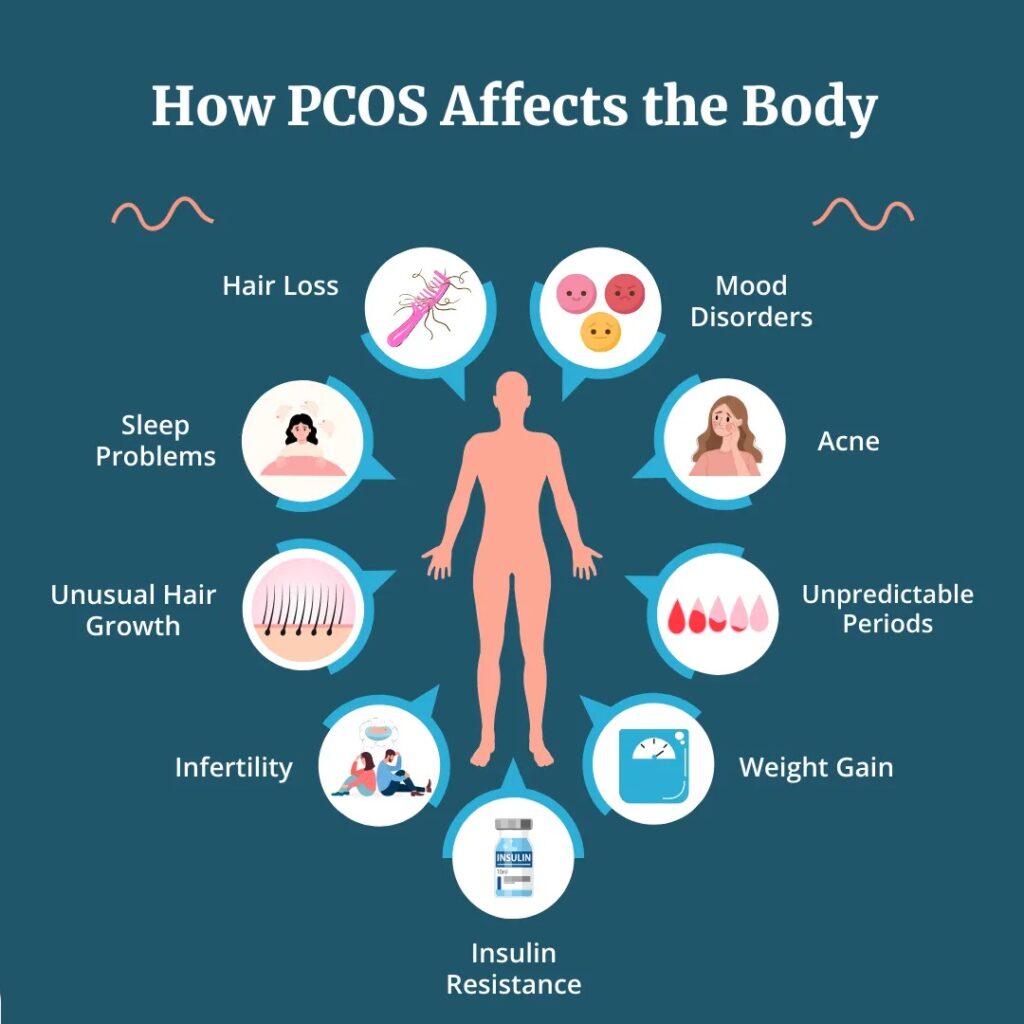
It doesn’t just affect your hormones or menstrual cycle but can cause symptoms like weight gain, hair loss, growth of facial hair and irregular periods which can be very distressing.
PCOS is also associated with increased risks of type 2 diabetes, heart disease, sleep apnea, and other health issues.
Causes of PCOS
The exact cause of PCOS isn’t fully understood, but research shows that several factors work together to trigger it.
Hormonal Imbalance
PCOS is mainly driven by higher-than-normal levels of androgens (often called “male hormones,” but present in all women). Excess androgens can interfere with normal ovulation and cause physical symptoms like acne and excess hair growth.
Insulin Resistance
Many women with PCOS have insulin resistance, which means their body doesn’t respond well to insulin. This makes the pancreas produce more insulin, which in turn stimulates the ovaries to make more androgens.
Genetics
PCOS tends to run in families. If your mother, sister, or aunt has PCOS or irregular periods, your chances of having it are higher.
Low-grade Inflammation
Some studies suggest women with PCOS have a type of low-grade inflammation that stimulates the ovaries to produce more androgens.
Symptoms of PCOS
Not every woman experiences all symptoms, and they can vary in severity. Some women notice symptoms early in their teens, while others find out only when they have trouble conceiving.
Common symptoms include:
Irregular or Missed Periods
One of the most common signs of PCOS is having fewer than nine menstrual cycles a year, very light periods, or no periods at all. This happens because PCOS disrupts the normal hormonal balance that regulates ovulation. Without regular ovulation, the menstrual cycle can become unpredictable.
Excess Hair Growth (Hirsutism)
Many women with PCOS notice thick, dark hair growth on areas such as the face, chest, abdomen, or back. This is caused by higher-than-normal levels of androgens (male hormones), which stimulate hair follicles in places where women usually have little or no hair.
Acne and Oily Skin
PCOS can cause the skin to produce more oil, leading to acne breakouts—especially on the face, chest, and upper back. This is again due to excess androgens stimulating oil glands. The acne may persist beyond the teenage years and can be difficult to treat with regular skincare alone.
Thinning Hair or Hair Loss
While some areas of the body may see excess hair growth, the scalp hair can become thinner—especially at the crown. This pattern is similar to male-pattern baldness and is also linked to high androgen levels.
Weight Gain or Difficulty Losing Weight
Many women with PCOS find it easy to gain weight and hard to lose it. This is partly because PCOS is linked to insulin resistance—a condition in which the body’s cells don’t respond well to insulin, making it easier for the body to store fat.
Skin Darkening (Acanthosis Nigricans)
Some women develop dark, velvety patches of skin in body folds such as the neck, underarms, groin, or under the breasts. This is often a sign of insulin resistance.
Skin Tags
Small, soft growths of skin—often found in the armpits or neck—are common in women with PCOS. These are harmless but can be bothersome cosmetically.
Fertility Problems
Because PCOS interferes with regular ovulation, it can be harder to conceive naturally. Many women first discover they have PCOS when they seek help for infertility.
Treatment for PCOS
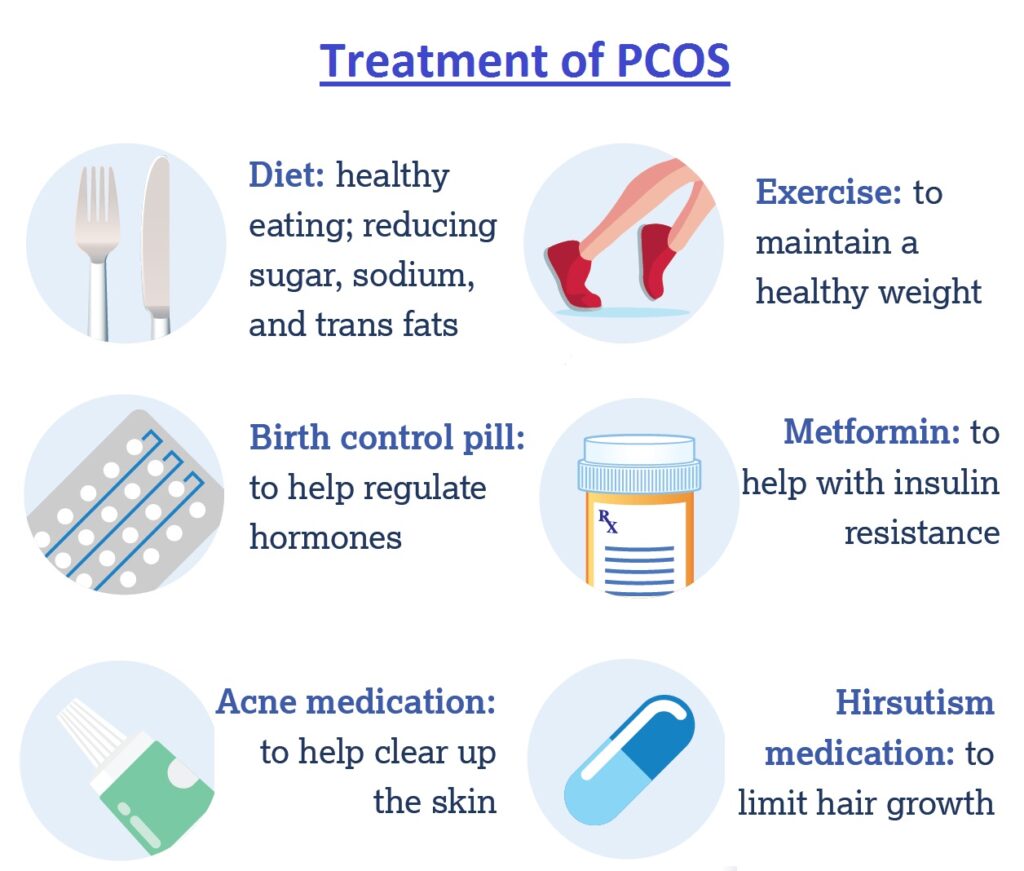
There’s no one-size-fits-all treatment for PCOS because symptoms differ from woman to woman. The goal is to manage symptoms, regulate periods, reduce long-term risks, and improve fertility if desired.
Lifestyle Modifications:
Healthy Diet
- Focus on a balanced diet rich in whole grains, vegetables, fruits, lean proteins, and healthy fats.
• Limit refined carbs, sugary drinks, and processed foods to help control insulin levels.
• A low-GI (glycaemic index) diet can help stabilize blood sugar.
Regular Exercise
- Aim for at least 150 minutes of moderate activity per week.
• Combine cardio (walking, cycling, swimming) with strength training to boost metabolism and improve insulin sensitivity.
Weight Management
- Even a 5–10% weight loss can significantly improve menstrual regularity and reduce androgen levels.
• This can also increase the chances of natural ovulation.
Medications for PCOS
Depending on your symptoms and goals, your doctor may suggest:
• Birth Control Pills – Birth control pills help to regulate menstrual cycles, reduce acne and excess hair growth by lowering androgen production
• Anti-Androgen Medicines – Examples: Spironolactone, to help reduce facial/body hair and acne
• Insulin-Sensitizing Drugs – Metformin is commonly prescribed to improve insulin resistance and restore ovulation
• Fertility Medications – Clomiphene citrate or letrozole may be used to trigger ovulation for women trying to conceive
Cosmetic and Dermatological Treatments
For women dealing with excess hair or acne:
• Laser Hair Removal or Electrolysis for long-term hair reduction
• Topical creams like eflornithine for slowing facial hair growth
• Dermatologist-recommended skincare for acne and pigmentation
Alternative & Supportive Therapies
Some women find symptom relief with:
• Inositol supplements – may improve insulin sensitivity and ovulation
• Vitamin D and B12 – often low in PCOS and important for metabolism
• Stress management – yoga, meditation, and mindfulness can help regulate hormones