Menopause is a natural stage in your life, but the hormonal changes that come with it can affect your bones, muscles, energy levels, mood, and overall wellbeing. During this phase, your body’s nutritional needs change, and certain supplements can help support your health and comfort.
Below are five commonly recommended supplements that may help you stay strong, active, and healthy during menopause.
Calcium
As you go through menopause, your estrogen levels drop, which can lead to faster bone loss. This makes calcium especially important for you during this stage of life. Calcium helps keep your bones strong and reduces the risk of osteoporosis and fractures.
You may not always get enough calcium from your daily diet, especially if you consume limited dairy products. Low calcium levels usually do not cause symptoms at first, but over time they can weaken your bones. Calcium also supports proper muscle function, nerve signaling, and heart rhythm.
Taking calcium supplements, along with vitamin D, can help your body absorb it better. Your doctor can guide you on the right dose based on your age, diet, and bone health.
Vitamin D
Vitamin D is essential for helping your body absorb calcium effectively. Without enough vitamin D, even a good calcium intake may not be enough to protect your bones. Many women entering menopause have low vitamin D levels, especially if they spend little time in sunlight.
Vitamin D also supports your immune system, muscle strength, and balance. Low levels may contribute to bone pain, muscle weakness, and an increased risk of falls. Some women also notice that maintaining healthy vitamin D levels improves their overall energy and mood.
Sunlight, certain foods, and supplements are sources of vitamin D. A simple blood test can check your levels and help your doctor recommend the right supplementation for you.
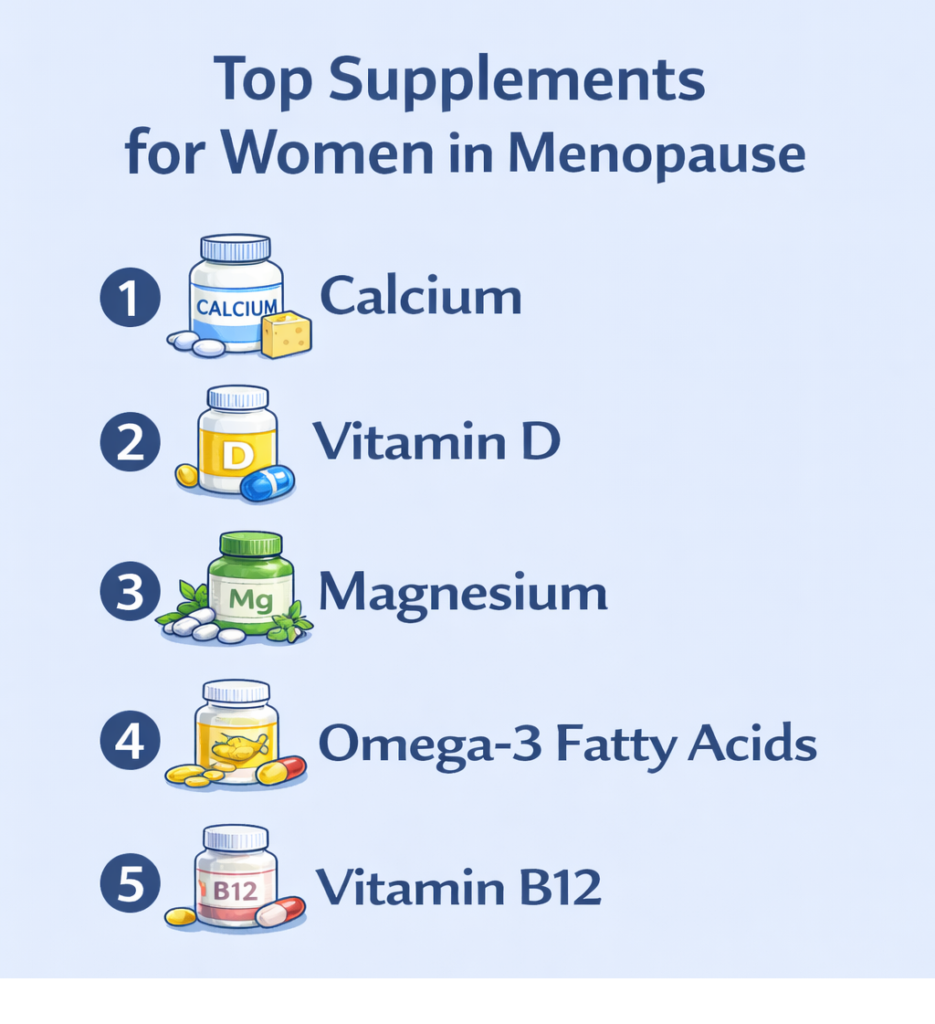
Magnesium
Magnesium plays an important role in keeping your muscles, nerves, and bones healthy. During menopause, magnesium can help ease muscle cramps, improve sleep quality, and support relaxation. It also works together with calcium and vitamin D to strengthen your bones.
If you experience poor sleep, anxiety, headaches, or fatigue during menopause, low magnesium levels may be contributing. Magnesium also supports heart health and blood sugar balance, which become more important as you age.
Although magnesium is found in nuts, seeds, whole grains, and green vegetables, many women do not get enough through diet alone. Supplements may help, especially if you have sleep disturbances or muscle discomfort.
Omega-3 Fatty Acids
Omega-3 fatty acids are beneficial for your heart, brain, joints, and overall inflammation control. After menopause, your risk of heart disease increases, and omega-3s help support healthy cholesterol levels and blood vessel function.
Many women find that omega-3 supplements help reduce joint stiffness, improve mood, and support memory and concentration. They may also help with mild hot flashes and skin dryness associated with menopause.
You can get omega-3s from fatty fish like salmon and sardines, as well as from plant sources such as flaxseeds. If your dietary intake is low, a good-quality supplement can be a helpful addition.
Vitamin B12
Vitamin B12 is essential for your energy levels, nerve health, and brain function. As you get older, your body may absorb vitamin B12 less efficiently, making deficiency more common during menopause.
Low B12 levels can cause fatigue, memory problems, mood changes, and tingling or numbness in your hands or feet. These symptoms can sometimes be mistaken for normal menopausal changes, which is why it is important to check your levels.
Vitamin B12 is mainly found in animal-based foods such as meat, fish, eggs, and dairy. If you are vegetarian or have digestive issues, you may be at higher risk of deficiency. Supplementation can help maintain healthy levels and improve overall wellbeing.
A Final Word
Supplements can play an important role in supporting your health during menopause, but they work best when combined with a balanced diet, regular physical activity, and healthy lifestyle habits. Not every woman needs the same supplements or doses, so it is always best to consult your doctor before starting any new supplement.