When Should You Plan Your First Visit to a Gynecologist?
Most major health organizations, including the American College of Obstetricians and Gynecologists (ACOG), recommend that adolescents have their first gynecology visit between the ages of 13 and 15 years. However, this doesn’t mean every teenager needs a full pelvic exam at that time. In fact, the first visit is usually more about building a relationship with the doctor, discussing puberty, periods, and reproductive health, and answering questions.
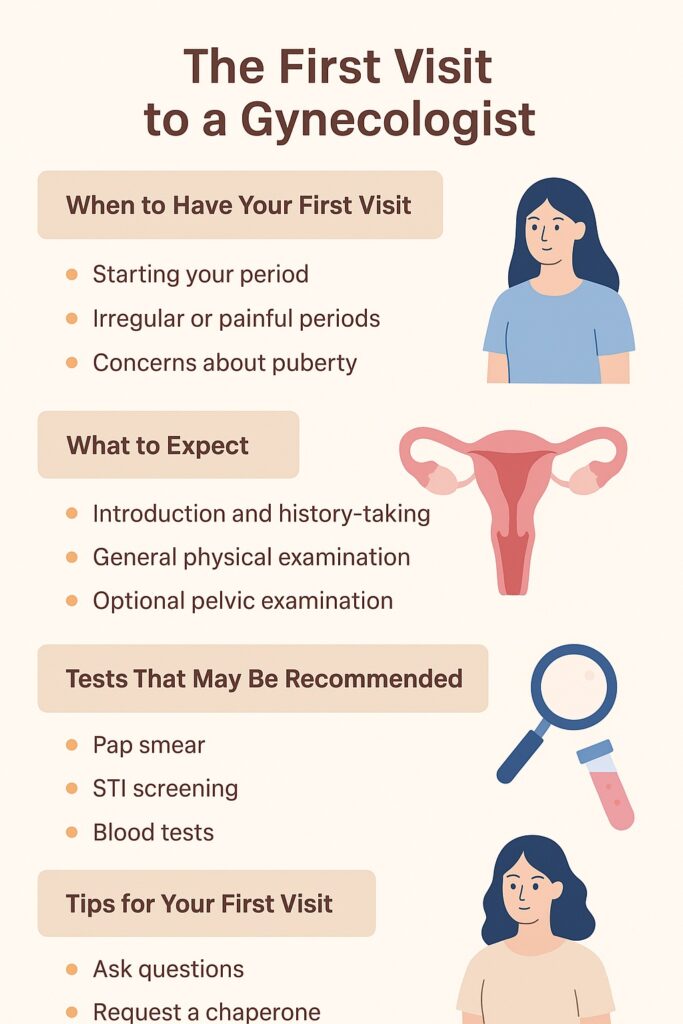
Here are common reasons when you should consider your first visit:
– Starting your period late (after age 15) or if it suddenly stops.
– Irregular or painful periods.
– Concerns about puberty.
– If you are sexually active.
– Experiencing unusual symptoms like vaginal itching, discharge, or pelvic pain.
– For general reproductive health and preventive care.
What to Expect During Your First Visit
The first visit can be a mix of conversation, general examination, and sometimes specialized tests depending on your age, history, and symptoms. It’s natural to feel nervous, but remember that gynecologists are trained to make the process comfortable and confidential.
Introduction and History-Taking
The visit usually begins with a conversation. The doctor or nurse will ask about your medical history, family history, menstrual cycle, sexual history, and lifestyle habits. This is also your opportunity to ask questions.
General Physical Examination
A baseline health check may include height, weight, and BMI measurement, blood pressure check, and sometimes a breast examination. In younger women, breast exams are often educational.
Pelvic Examination (if required)
Not all first visits involve a pelvic exam. If you are young, not sexually active, and not experiencing symptoms, the doctor may skip this. If necessary, it may involve:
– External exam
– Speculum exam
– Bimanual exam
Tests That May Be Recommended
Depending on your age, symptoms, and history, the following tests may be advised:
– Pap smear (starting at age 21)
– HPV testing
– STI screening
– Blood tests for general health or hormones
– Ultrasound for pelvic pain or irregular periods
Tips to Make Your First Visit Comfortable
- Don’t be afraid to ask questions.
2. You can request a chaperone.
3. Be honest about your history.
4. Wear comfortable clothing.
5. Remember your privacy is respected.
Why the First Visit is So Important
The first gynecology visit is about building trust and understanding your body. It’s also about learning safe practices, detecting problems early, and establishing a relationship with your doctor for lifelong reproductive health care.